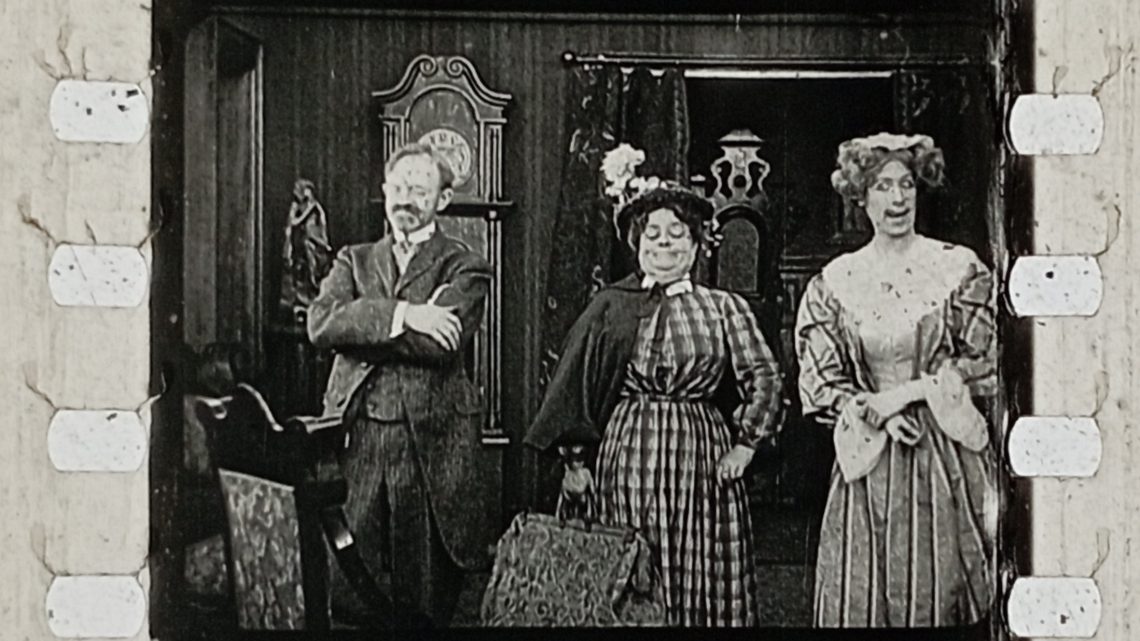
Unearthed Treasures – episode #9 : How Spriggins Took Lodgers
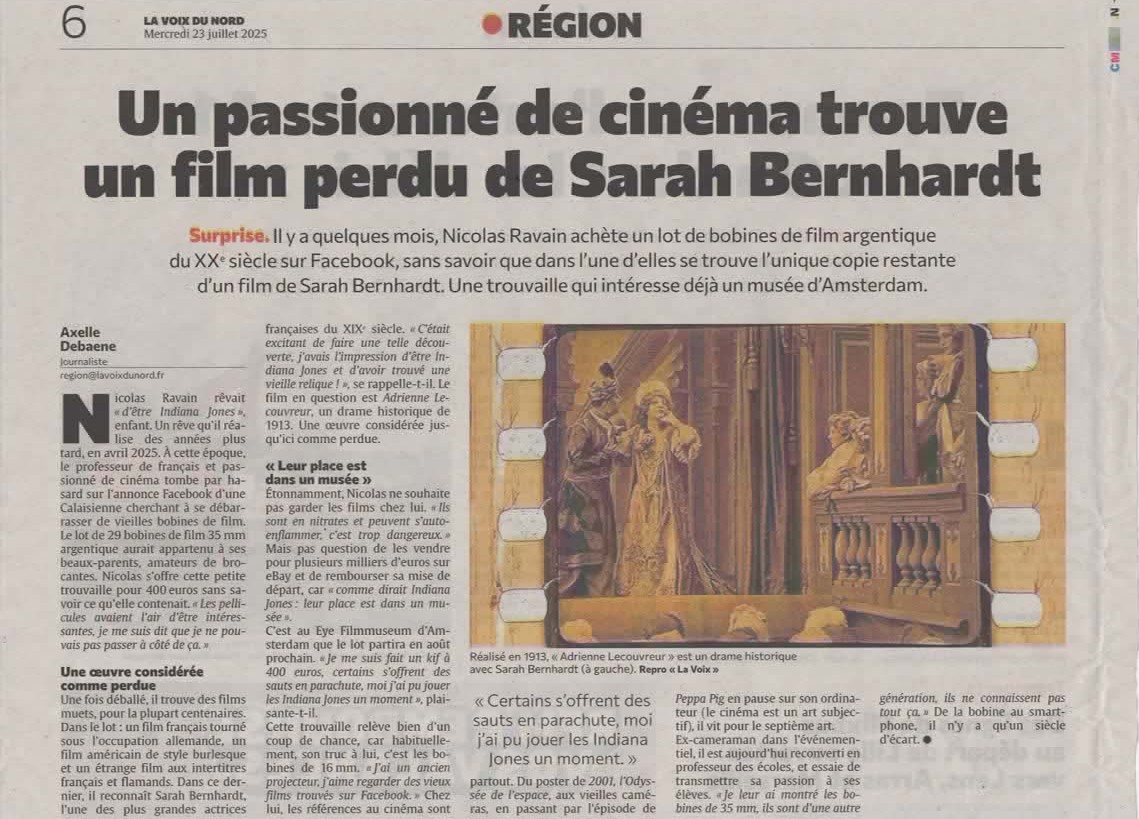
A year ago, in the first instalment of Rediscovered Treasures, I announced the discovery of a batch of around thirty 35mm film reels containing several excerpts from silent films, some of which had previously been considered lost: Adrienne Lecouvreur (1913), starring Sarah Bernhardt, Al Christie’s Out for the Coin, La Bonté de Jacques V (1911), and Impéria (1920).
Following this extraordinary discovery, the French regional newspaper La Voix du Nord published a short article about me in its 23 July 2025 edition. In it, I spoke about my childhood idol, Indiana Jones, and my passion for the seventh art in general.
A few days later, I was on holiday in the south of France, staying with my father and my children.
Sunshine, swimming pool, sea, palm trees, barbecue: life was good.
Then my phone rang.
Unknown number.
I didn’t answer. Surely someone was trying to sell me a wood-burning stove, an internet subscription or something equally exciting.
“You have a new message,” my phone informed me.
So I listened.
And I couldn’t believe it.
A couple who run a community cinema in Bousbecque, a small town in northern France, had read the article about me in La Voix du Nord. They wanted to know whether I might be interested in recovering some film reels they had been storing in a garage for more than ten years.
Did I want them? Absolutely!
But I had to keep my feet on the ground. Perhaps there wouldn’t be much to get excited about. Discoveries like this couldn’t happen twice in a row… could they?
As soon as I returned home, we arranged a visit so that I could see for myself what the “Bousbecque lot” contained.
It was afternoon. The sun was beating down. The couple were there, all smiles — absolutely lovely people. “Fifi” opened the door to the small garage.
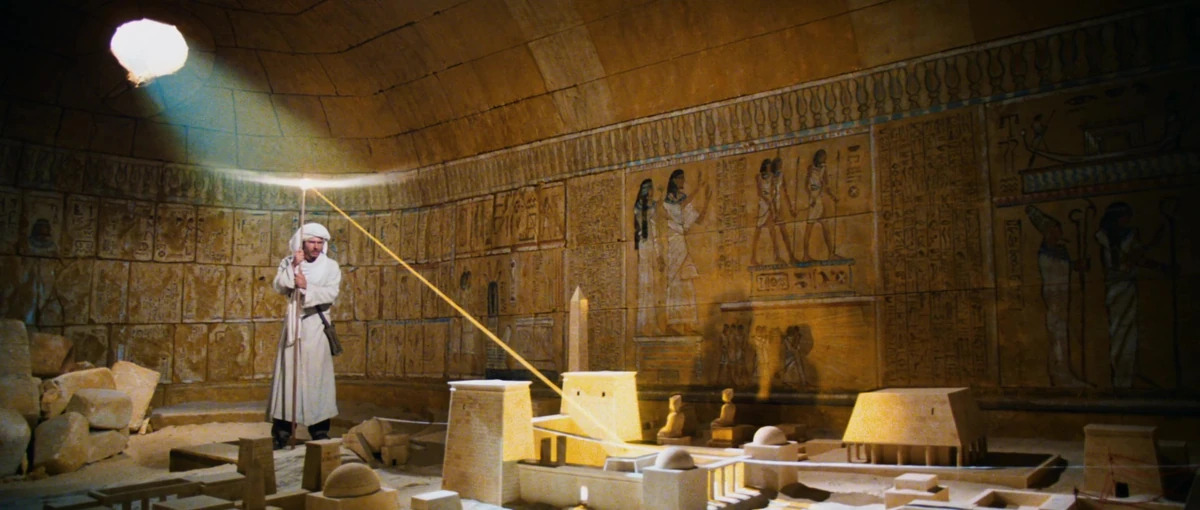
And once again, I was Indiana Jones discovering the entrance to the lost city of Tanis.
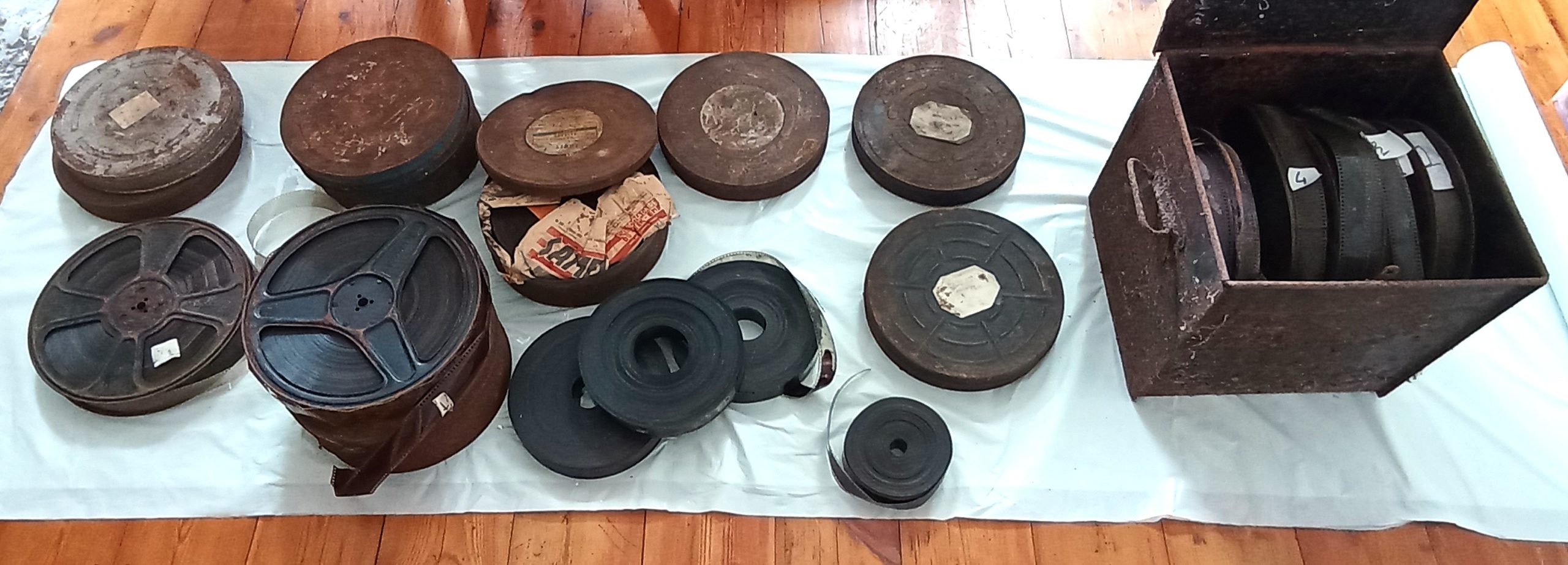
There were dozens of rusty, dented film cans, along with two large sealed metal drums.
My very own Arks of the Covenant.
With a screwdriver, a hammer and a little help from “Fifi”, we began opening everything.
I carried out a quick inspection, unrolled a few metres of film, deciphered some labels and made a rough inventory.
And then I had to face the truth: this was the big one.
Even bigger than the “Calais lot”.
I’m not going to reveal all the treasures hidden in the “Bousbecque lot” just yet, as I intend to introduce several of them over the coming months. But we’re talking about around sixty reels, including several films previously considered lost — and, as the icing on the cake, some of them are COMPLETE this time!
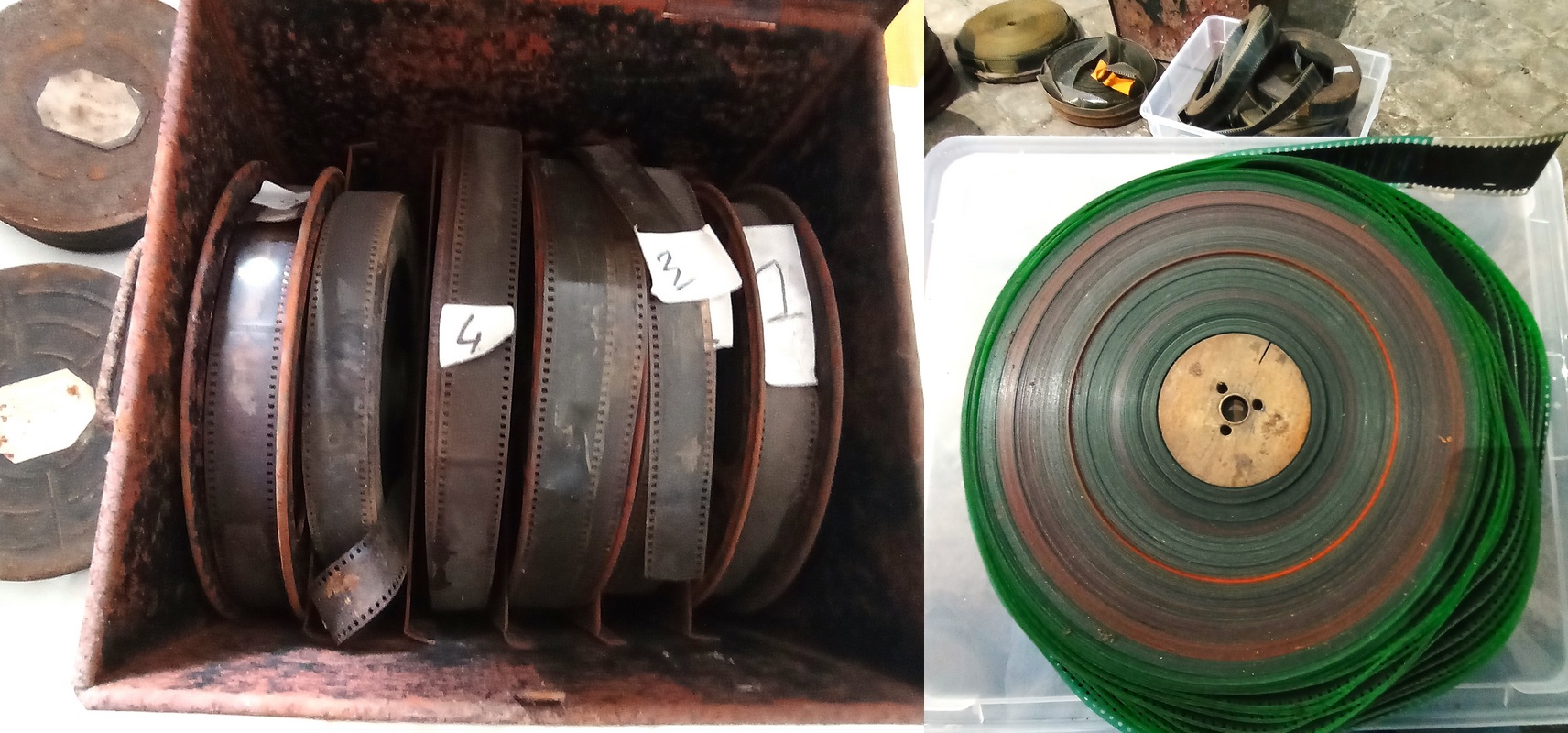
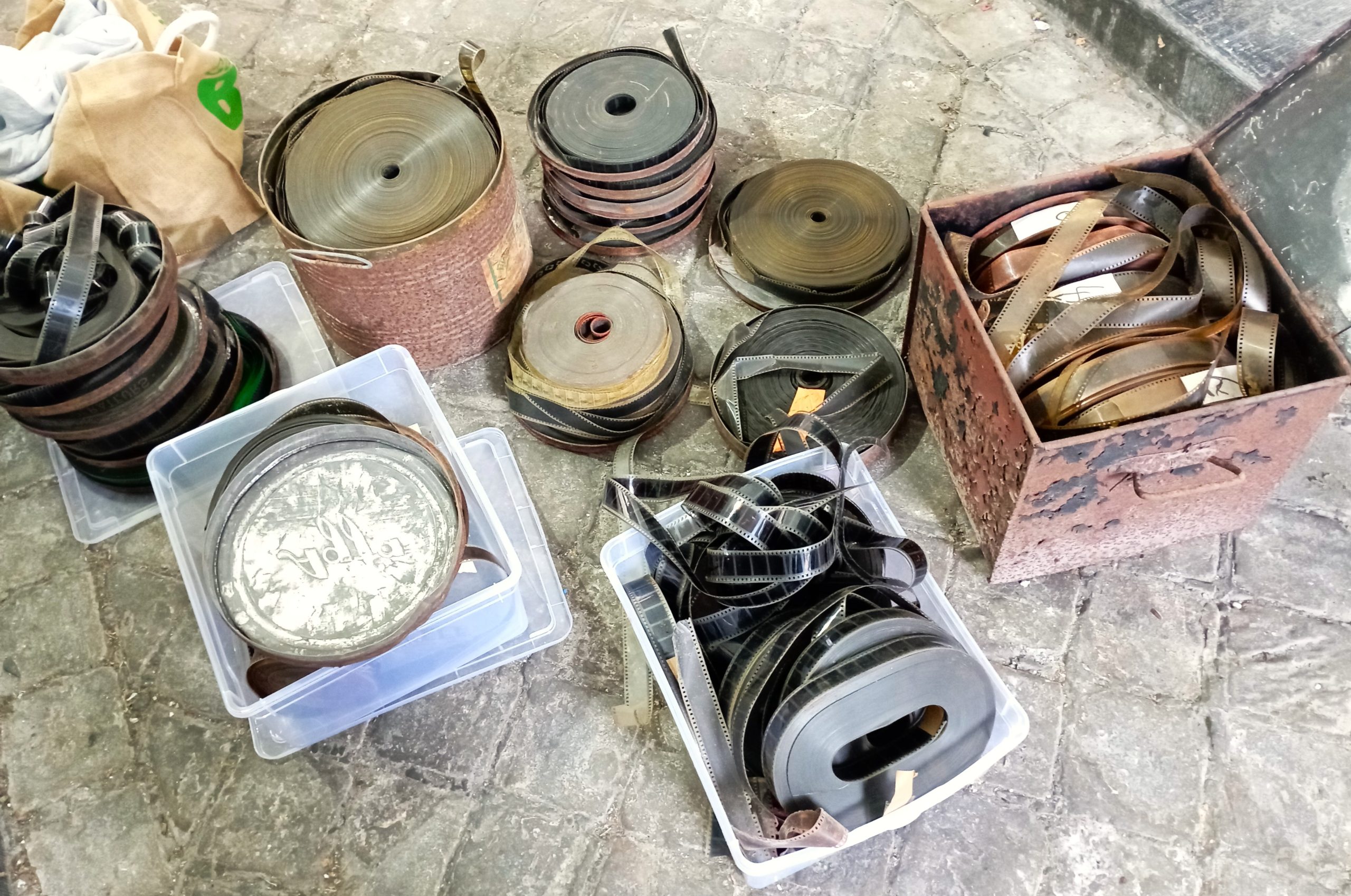
So, to begin with, let’s take a look at one of the reels bearing intertitles stamped with the name Thomas A. Edison…
1 – Ici, on parle français
Released in April 1911 under the title How Spriggins Took Lodgers, this film produced by the Edison Company is an adaptation of the English play Ici on parle français, or The Major’s Mistake by Thomas J. Williams. An efficient craftsman of Victorian comedy and the prolific author of around eighty plays built around the same formula — short running times, a single setting, frantic pacing and a cascade of misunderstandings — Williams wrote his works “assembly-line style” to meet the strong demand from London’s popular theatres. My Turn Next, Turn Him Out, Smashington Goit, Who Is Who? or All in Fog and Old Gooseberry: none of these plays managed to survive the passage of time, with the exception of Ici on parle français, which became a minor classic of comedy, performed regularly for decades in many parts of the world before falling into obscurity after the First World War.
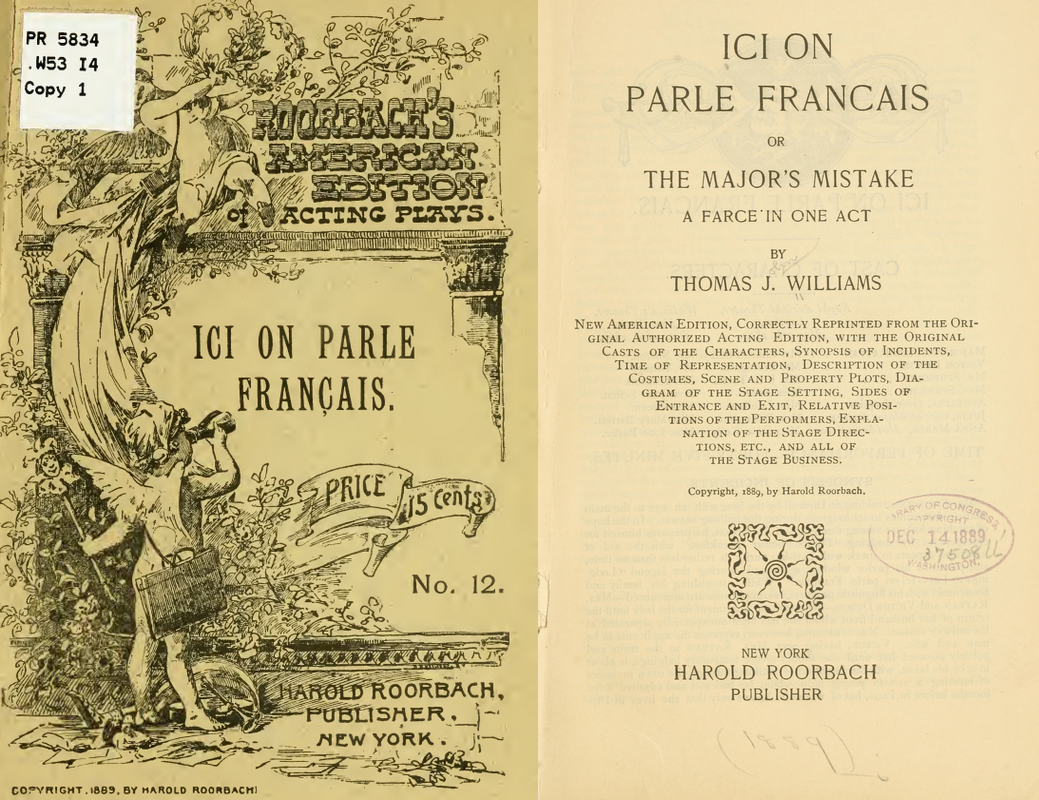
The play premiered at London’s New Royal Adelphi Theatre on 9 May 1859. More than fifty years later, it was adapted for the screen by Thomas Edison’s company, which hoped to capitalise on the success of this “immensely popular and clever English farce”1 in one act.
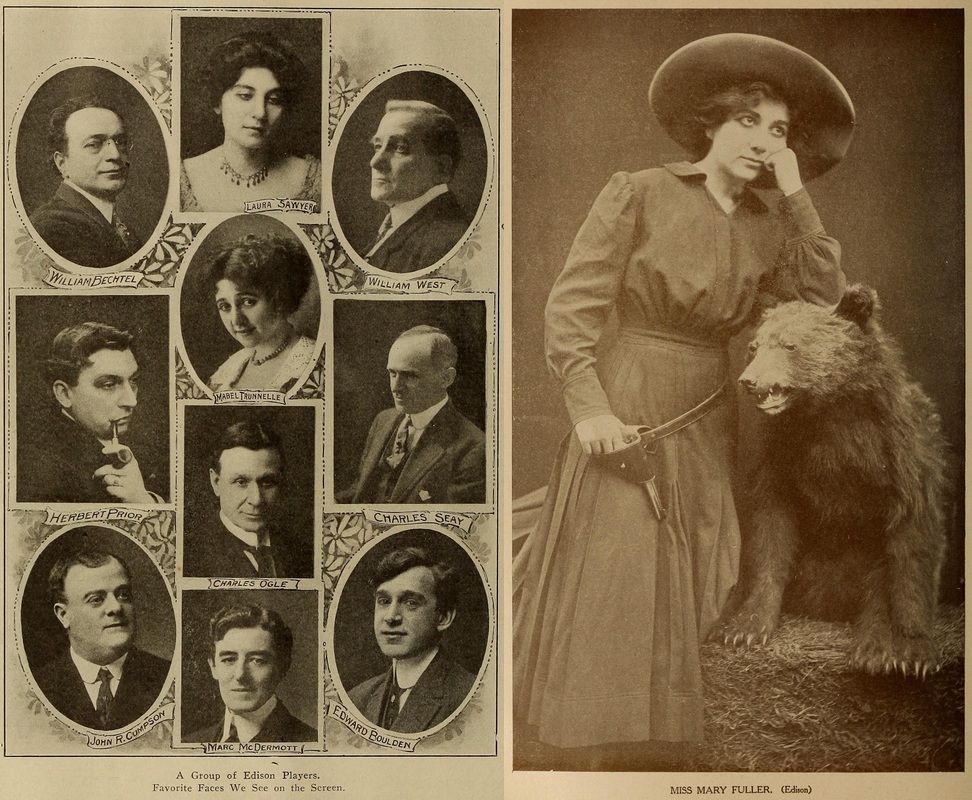
By 1909, the Edison Company was experiencing a certain decline in the face of increasingly fierce competition. In an attempt to restore its reputation, it established a permanent company of professional actors and began adapting classic plays, operas and famous novels in order to attract a more bourgeois audience. In 1911, the Edison Stock Company was primarily made up of Mary Fuller, Miriam Nesbitt, Carrie Clark Ward, Elsie McLeod, Marc McDermott, Charles Ogle, William West and Edward Boulden.
2 – Domestic Affairs
Several of these names would indeed appear in the cast of How Spriggins Took Lodgers, alongside a leading theatrical figure described in the contemporary press as a performer “whose wide experience and careful attention to detail […] has made him an invaluable member of many of the country’s best companies”2: Sedley Brown.
Born into a long line of actors — his mother, Mary Sedley Brown, was a legend of the theatrical world, known as the “Grand Old Lady of the American Stage” — and already 55 years old when the film was made, Brown appeared in front of a camera for the first time after a long and successful career on stage as an actor, writer and director.
The earliest documented trace we have dates from 1875, when he played John Reed in a stage adaptation of Jane Eyre, alongside the actress Charlotte Thompson.
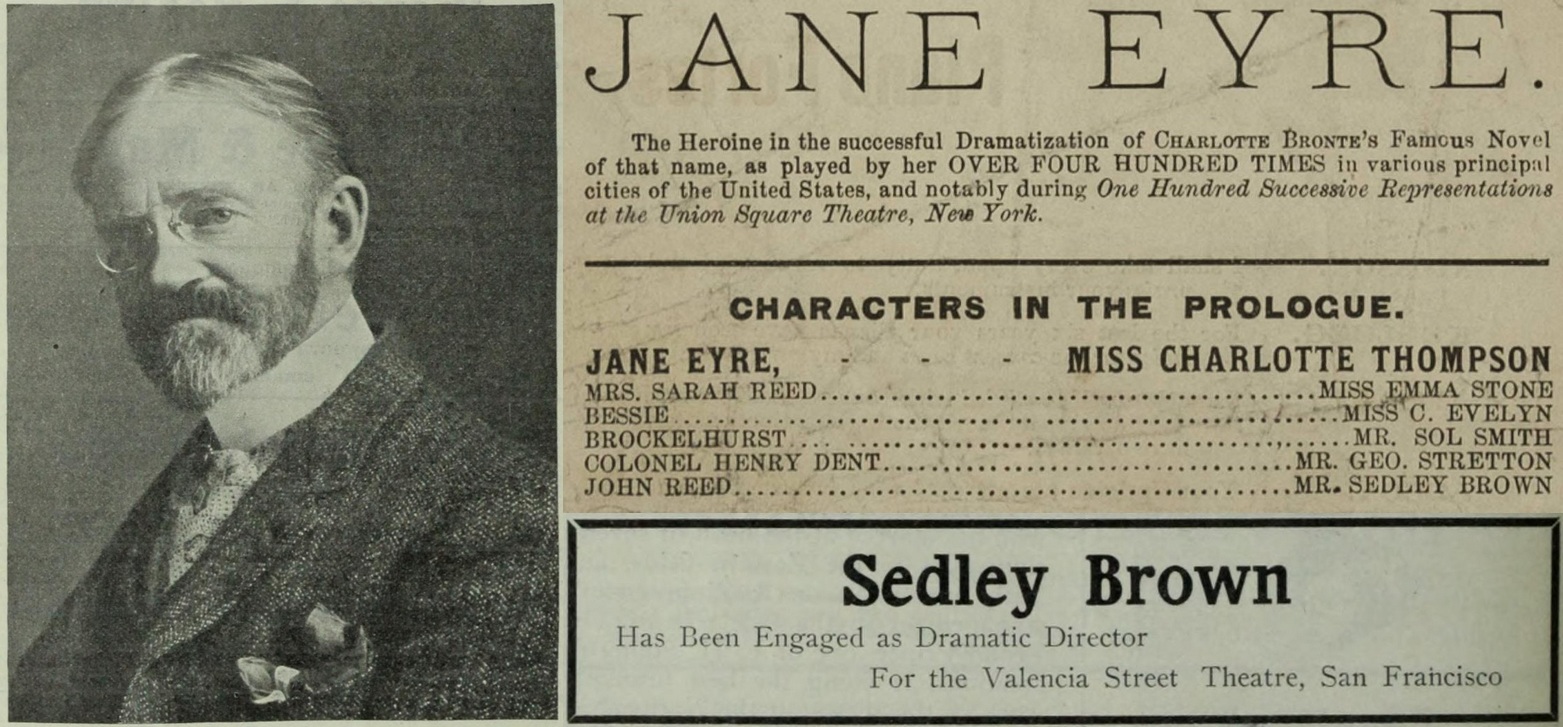
Portrait of Sedley Brown in 1908
After divorcing his first wife, Henrietta Crosman, in 1896, Sedley Brown continued to manage touring companies across the country. Among those he employed was a young Thomas H. Ince, barely fifteen years old, who worked as a “general utility man”3 for the Beryl Hope Stock Company. Brown later met Carrie Clark Ward, who performed alongside him on stage and would become his wife in 1906.
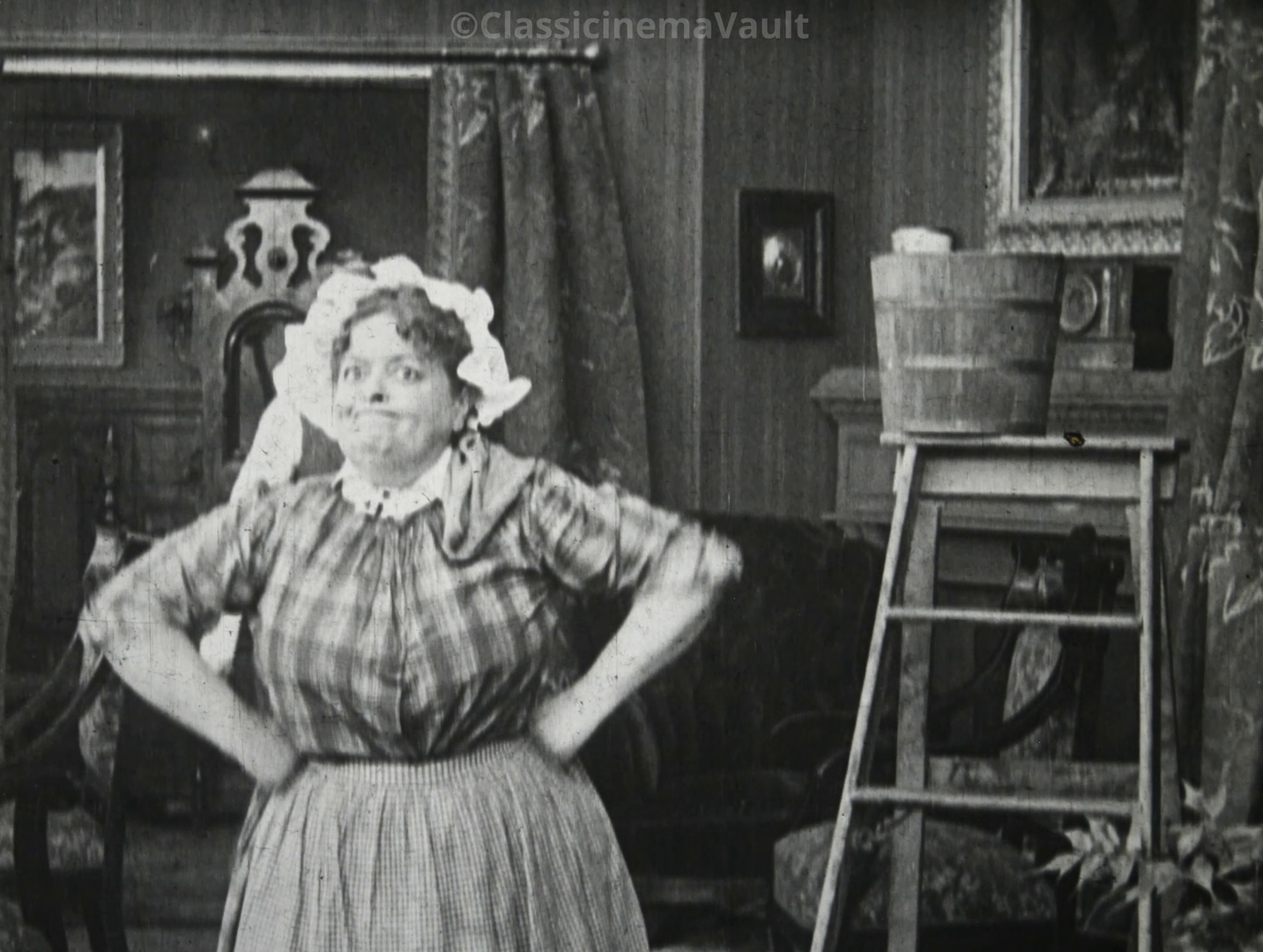
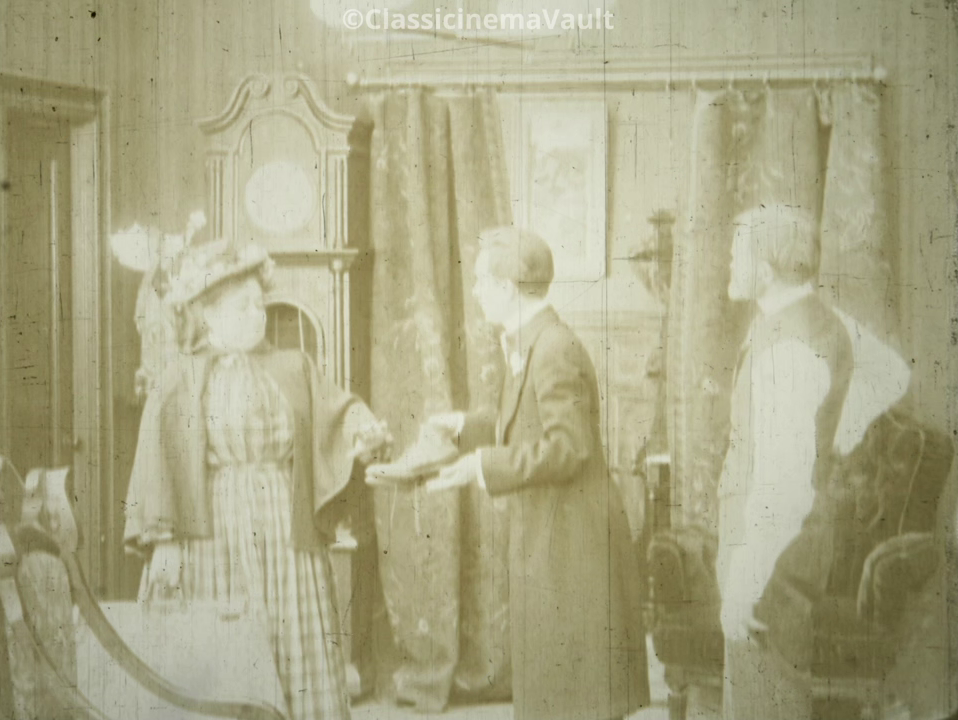
When Edison’s company called upon this “genius director”4 to play Mr. Spriggins in its film adaptation of Ici on parle français, Brown insisted that his wife be cast as Anna Maria, the household servant. This choice marked a complete departure from the original play. Whereas the 1859 text described a small, unassuming and overwhelmed English maid, the actress brought to the screen a sturdy physical presence, exaggerated facial expressions and an authoritative temperament that completely reversed the balance of power between the servant and her employers.
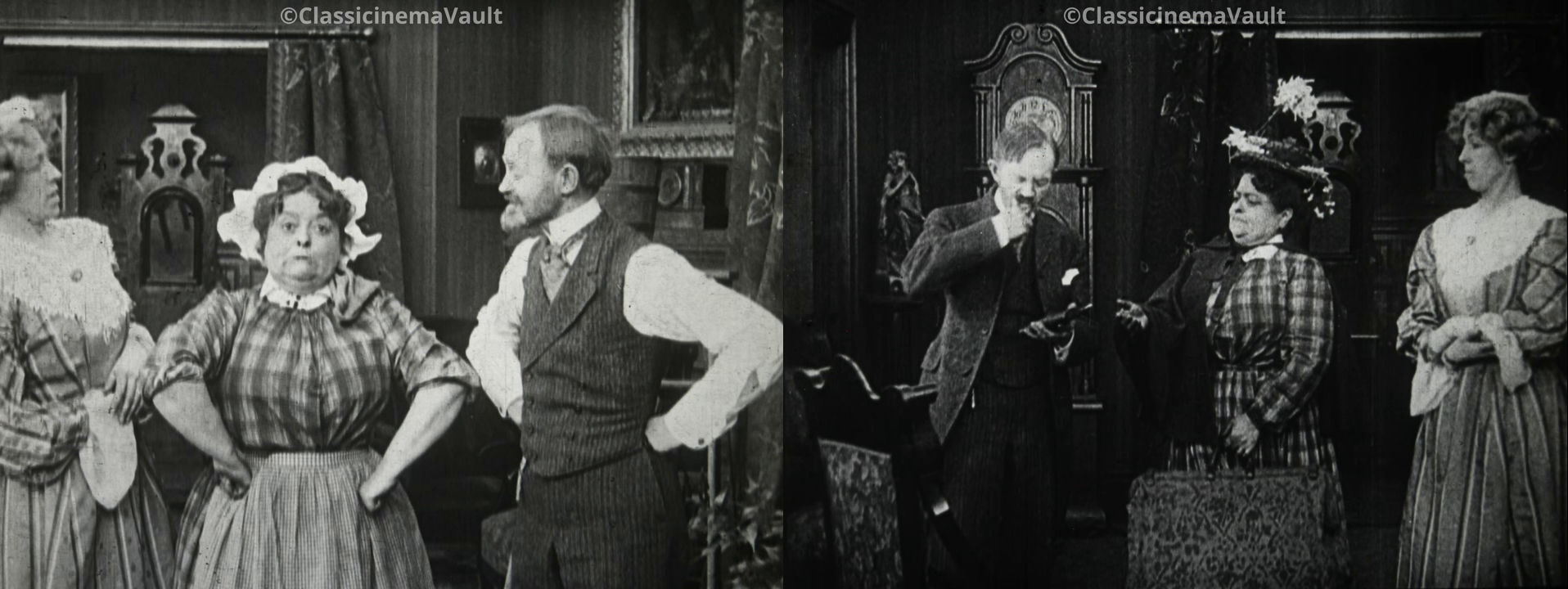
Miriam Nesbitt, Sedley Brown and Carrie Clark Ward in How Spriggins Took Lodgers (1911) – Stills taken from the 35mm print in the Classicinema collection
Unlike her husband, who would never pursue a career in cinema, Carrie Clark Ward went on to appear in more than seventy films, working with major directors such as Raoul Walsh, Frank Lloyd, Marshall Neilan, King Vidor and Clarence Brown. She also performed alongside Charlie Chaplin, Sessue Hayakawa, John Gilbert, Lon Chaney and Rudolph Valentino.
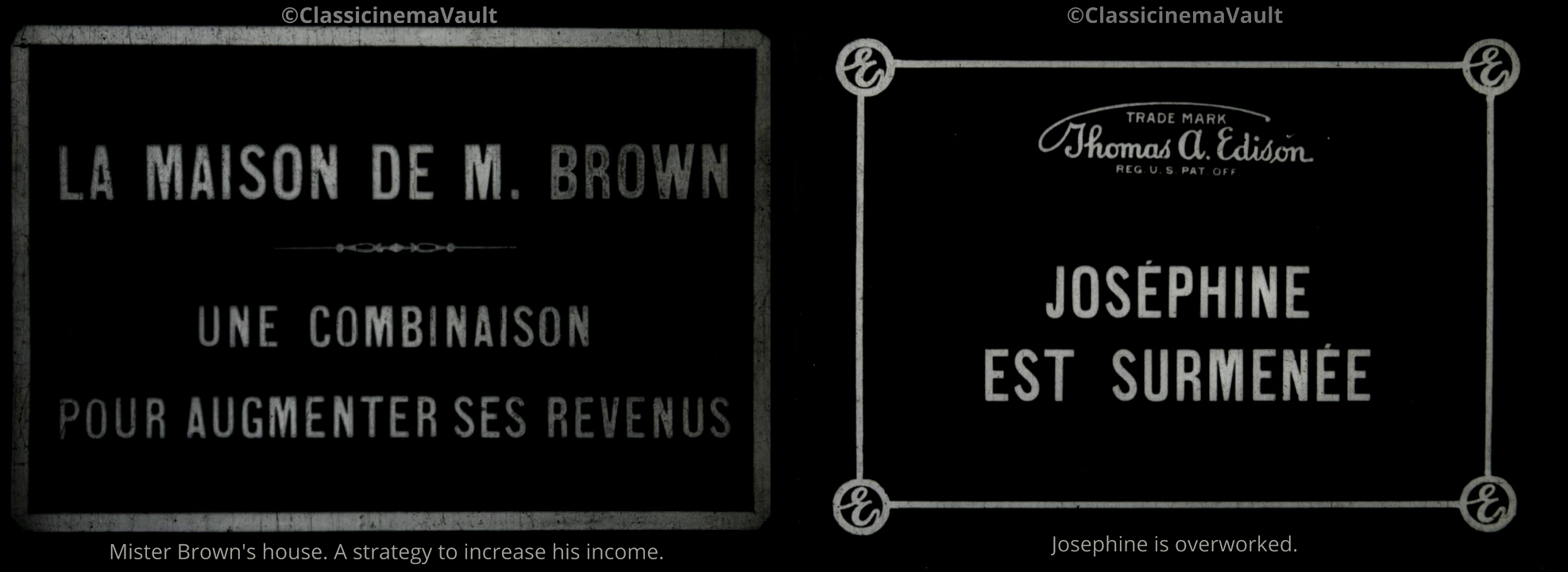
It should be noted that, in the French print of the film found in the “Bousbecque lot”, the characters’ names have been changed. Thus, “Mr. Spriggins” naturally becomes “Mr. Brown”, while Anna Maria becomes “Joséphine”.
Another married couple, both in real life and on screen, appears in the cast of How Spriggins Took Lodgers: Miriam Nesbitt and Marc McDermott, although they would not marry until 1916.
After a long stage career and several Broadway successes, Miriam Nesbitt joined Edison’s studios in 1908. She appeared in nearly 150 films, often playing elegant and authoritative figures — including Queen Anne of Austria and Elizabeth I — before ending her career in 1917, when Edison decided to close its film division permanently. In How Spriggins Took Lodgers, she plays the Major’s wife, whose encounter with a young Frenchman on a train triggers an excessive fit of jealousy from her husband.
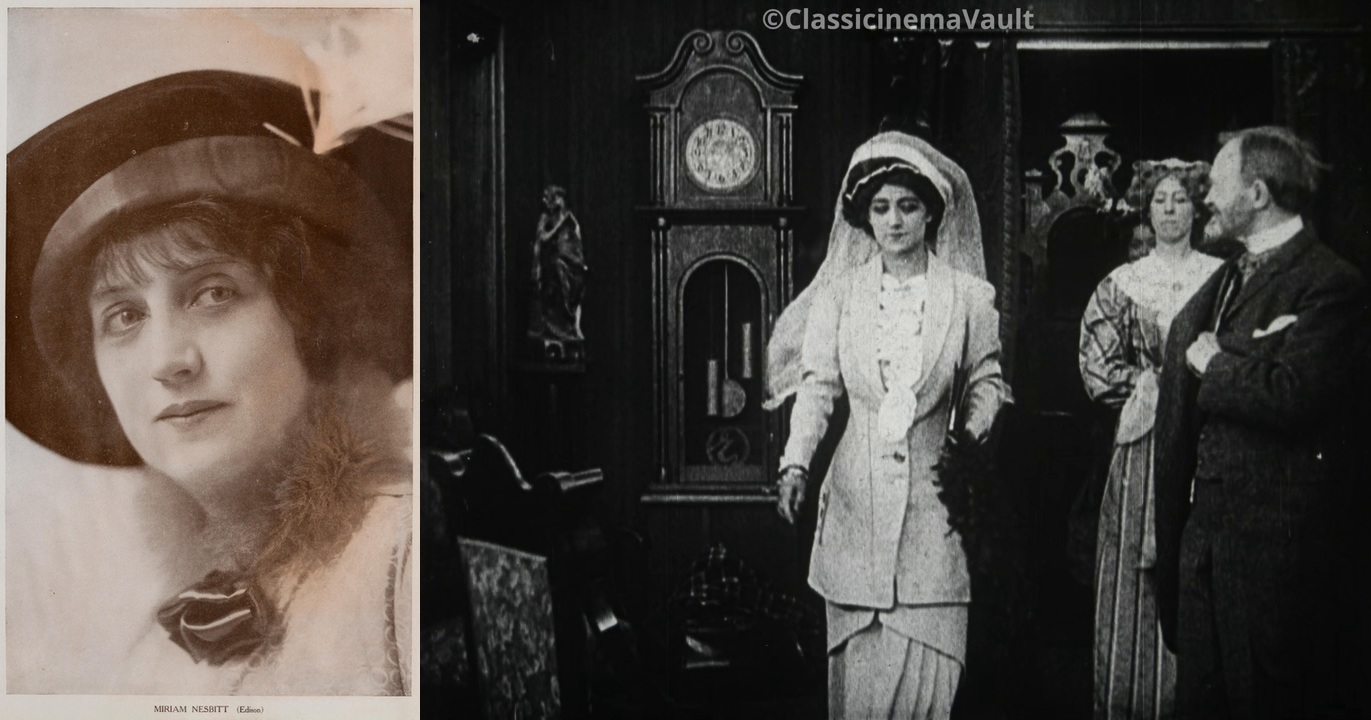
Her screen partner, Marc McDermott, joined Edison’s company in 1909 and quickly became its leading male actor. Possessing an intense magnetism and a piercing gaze, he specialised in complex roles, psychological dramas and larger-than-life characters, including Ebenezer Scrooge in A Christmas Carol (1910).
Unlike his wife, McDermott continued his career after leaving Edison, working for Vitagraph, Fox, MGM and Universal until 1928. He also appeared several times under the direction of Clarence Brown, notably in The Temptress and Flesh and the Devil.
In How Spriggins Took Lodgers, however, McDermott slips into the role of a Major encumbered by his military uniform, clumsy, highly expressive and driven mad by jealousy — a far cry from his usual intense and complex characters.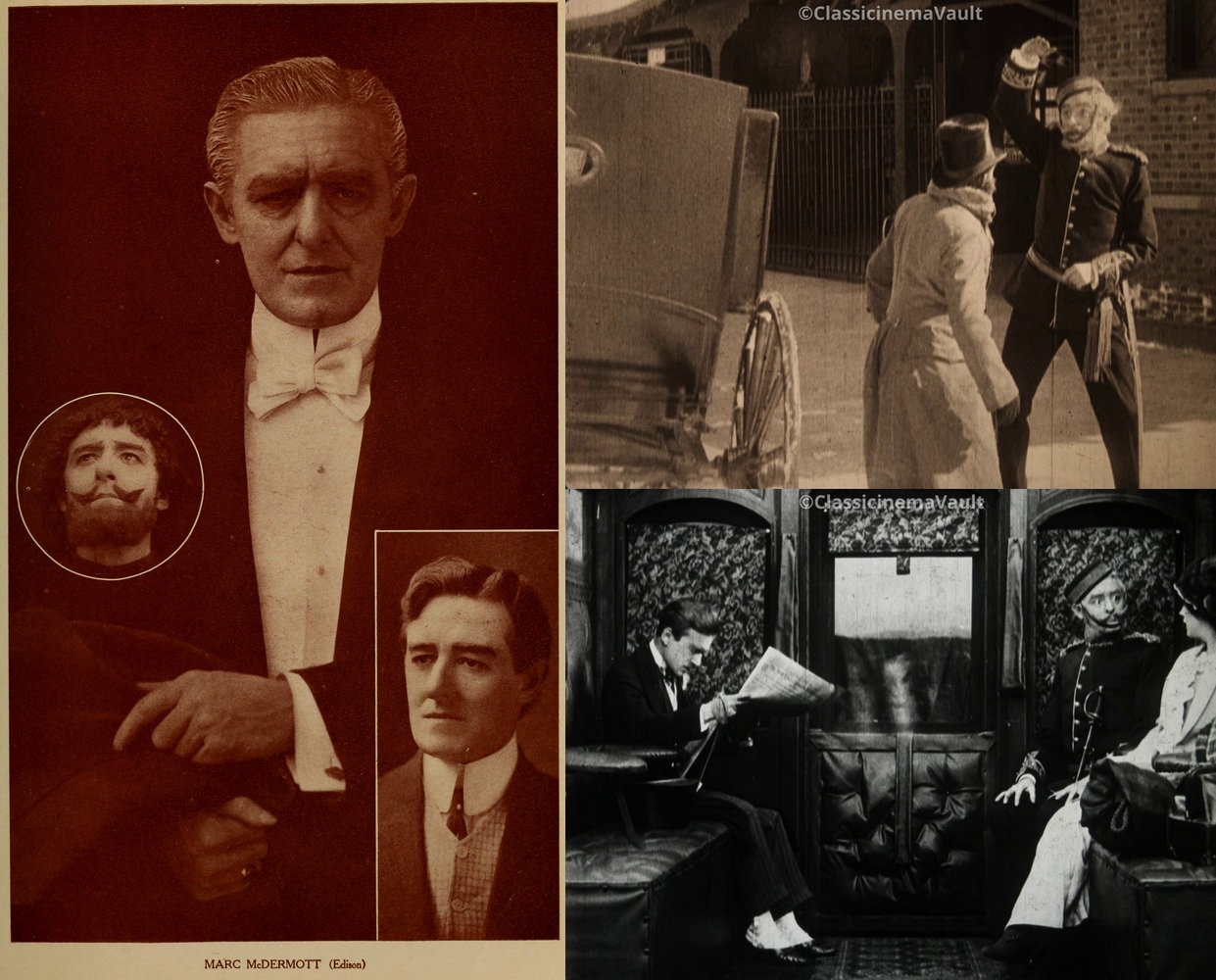
We should also mention Edward Boulden, who plays the “young Frenchman”, as he was described in the contemporary press, and who is named Victor in our French print.
Boulden’s film career began early, either in 1903 or 1907, within the Edison organisation, where he became a master of disguise and a specialist in comedy characters. Far removed from the often extravagant roles he played elsewhere, he portrays in How Spriggins Took Lodgers a neat and respectable little Frenchman who unwittingly provokes the Major’s jealousy.
Boulden would later make film history as a pioneer of talking pictures, becoming one of the stars of Edison’s Kinetophones: small experimental films combining moving images with sound reproduced from a cylinder phonograph.
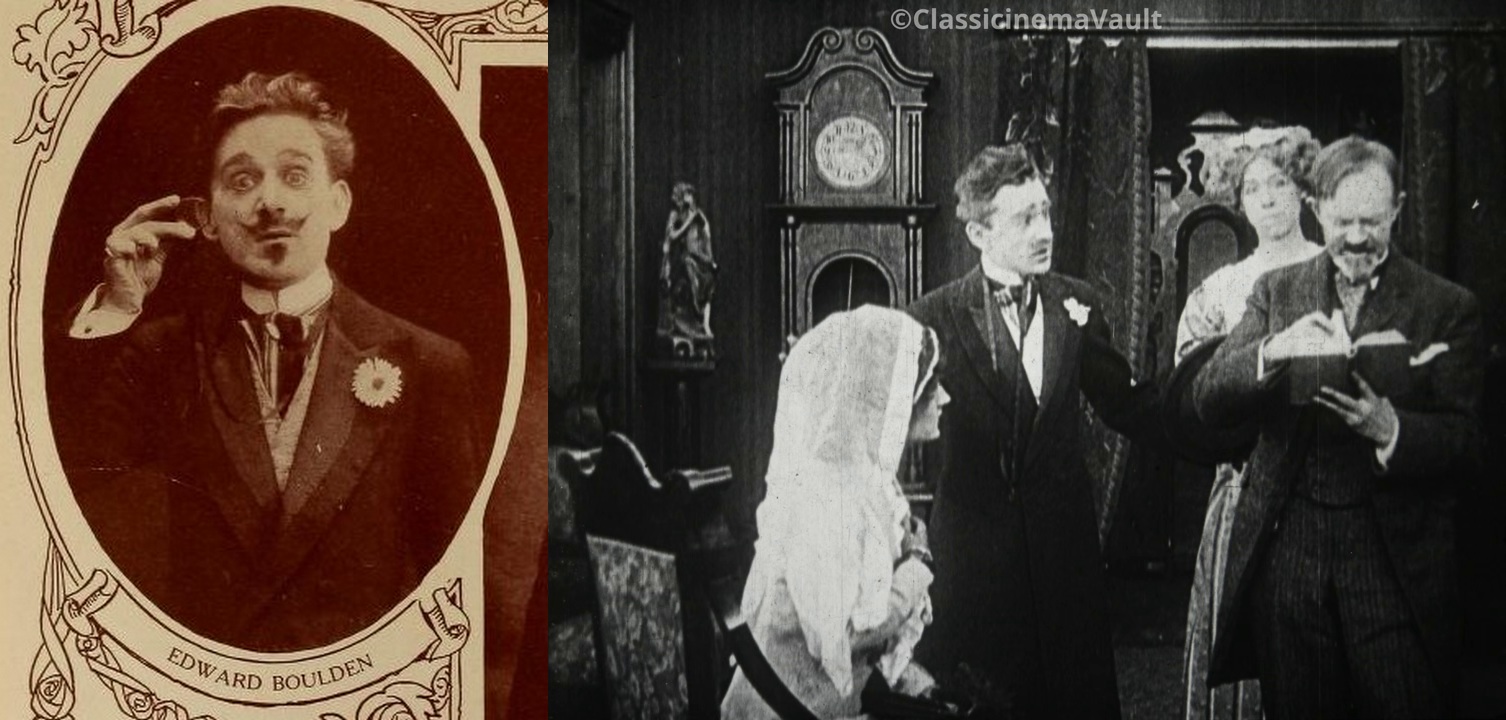
Edward Boulden in 1912 (left)
Before leaving the subject of the cast, we should nevertheless point out that two actresses in the film remain unidentified to this day. Who plays Mr. Spriggins’ rather sharp-tongued wife? And who is the little brunette portraying their daughter?
If you are reading this and recognise something in the following images or in the film itself, please let us know in the comments!
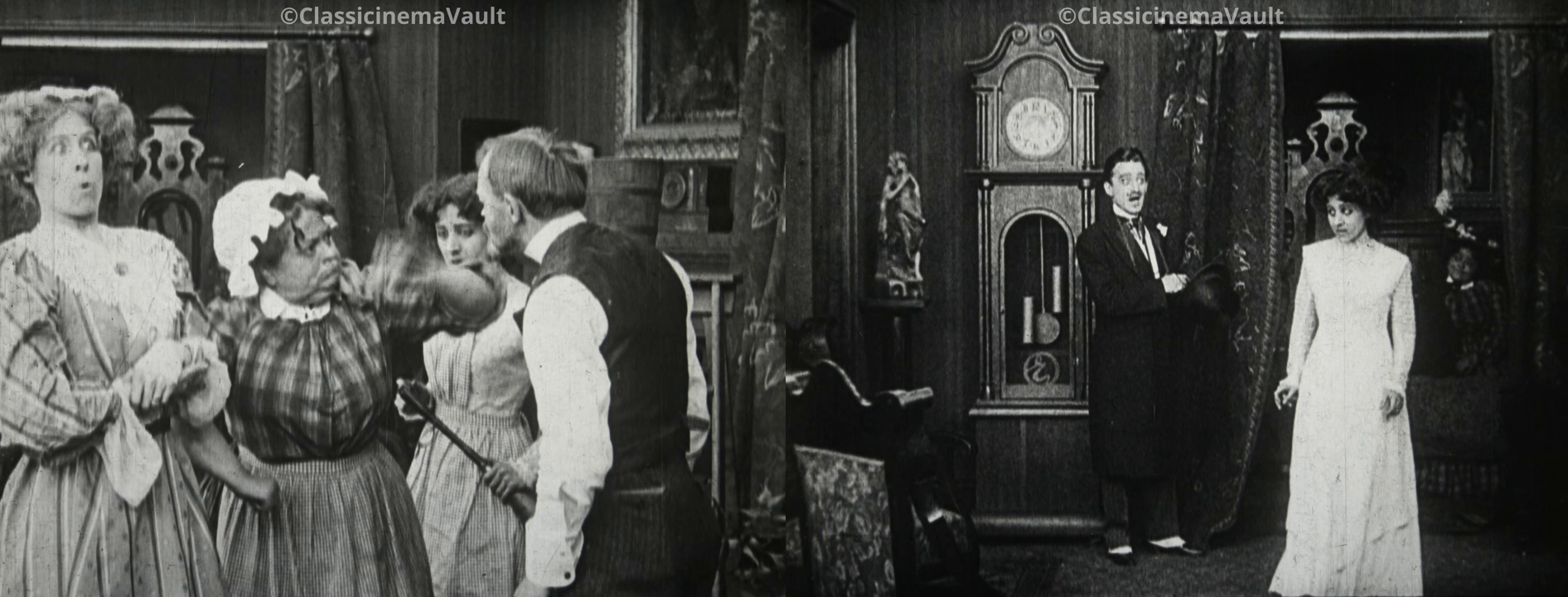
1st image: unidentified actress on the left; 2nd photo: unidentified actress on the right
3 – (not) Fast and (not) Furious
Let’s briefly sum up the plot of How Spriggins Took Lodgers. In order to supplement his income, Mr. Spriggins — or Mr. Brown in our French print — decides to rent out rooms, advertising the establishment with the promise “Ici on parle français” (“French spoken here”). Through a series of misunderstandings, he takes in a female guest and a young Frenchman who helped her on the train. Her husband, an extremely jealous British Major, arrives at the boarding house in a fury. Armed with nothing more than a dictionary, Spriggins does his best to manage a situation that steadily spirals out of control, eventually leading to a pistol duel.
A minor stage classic, the Edison studios, a strong cast and a “genius” actor-director in the leading role — and perhaps even in the director’s chair? — seem, at first glance, to provide all the ingredients for a brilliant comedy. Some contemporary reviews certainly appear to have been won over, describing it as “a splendidly characterised and acted version of [the play] with a cast of uncommon strength”5, “a jolly farce […] sure to keep an audience in a roar from start to finish”6, or simply “fast and furious”7. Personally, however, I find myself agreeing more with Motography, which wrote upon the film’s release: “With apparently the best of intentions on the part of actors and producer this comedy fails to be funny. There is much time frittered away on unimportant details, and the points are not put across very effectively.”8
Admittedly, the age of burlesque had not yet arrived. There was no Mack Sennett, Charlie Chaplin, Ben Turpin, Roscoe Arbuckle or Mabel Normand in the credits. At the time How Spriggins Took Lodgers was released, the great American comedy star was John Bunny, famous for his jovial, corpulent appearance and his success in rather conventional comedies of manners at the rival Vitagraph studio.
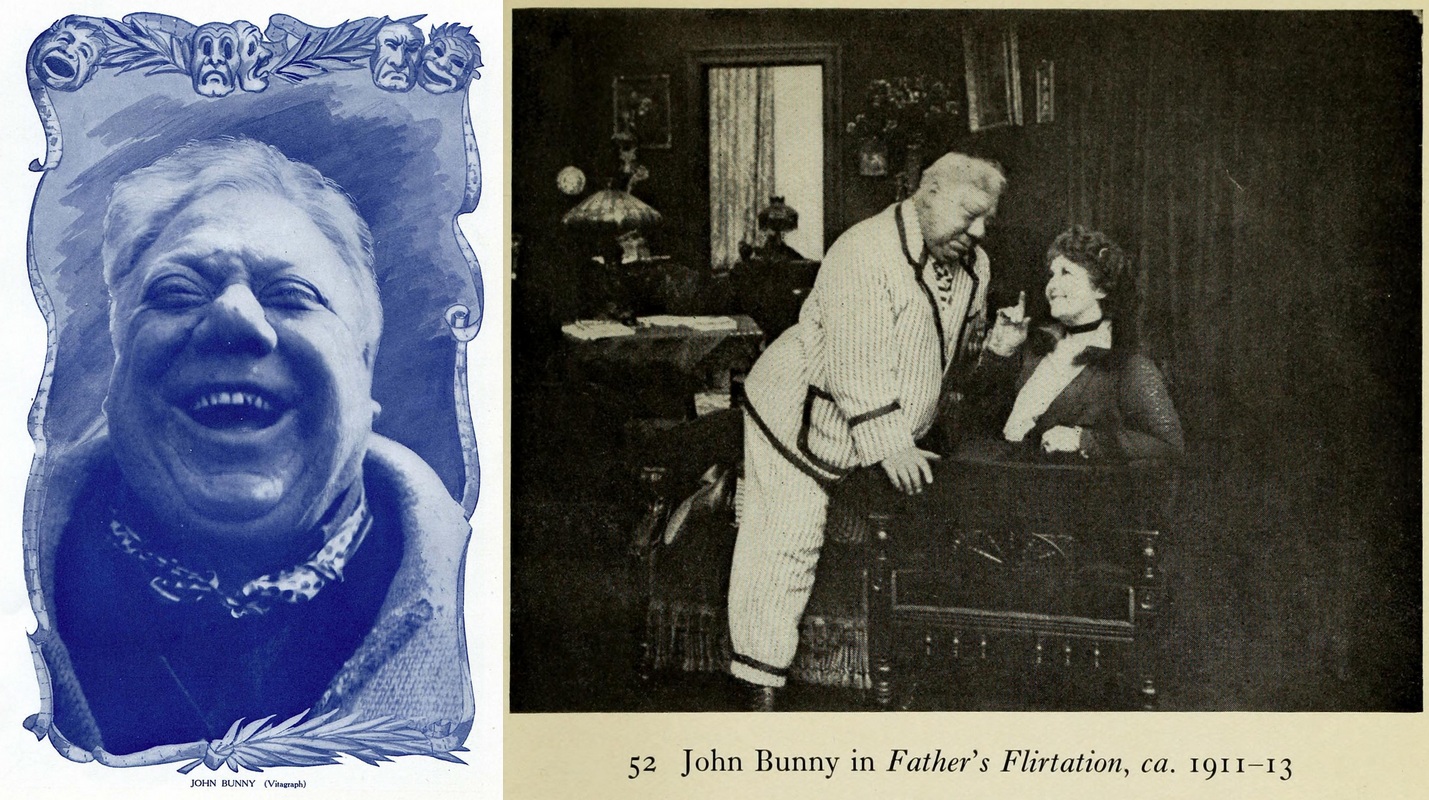
How Spriggins Took Lodgers belongs very much to the same tradition, with what Noël Burch calls a “primitive mode of representation”: fixed long shots, studio-built interiors, flat and uniform lighting, and minimal editing. It is therefore difficult — at least for modern viewers — to detect the “fast and furious” pace that contemporary reviewers claimed would have audiences bursting into laughter. Moreover, as the original play Ici on parle français relied heavily on the linguistic blunders of English characters attempting to speak French, much of that comic element falls almost completely flat here, despite Sedley Brown’s frantic gestures as he appears unable to understand what the Frenchman is saying.
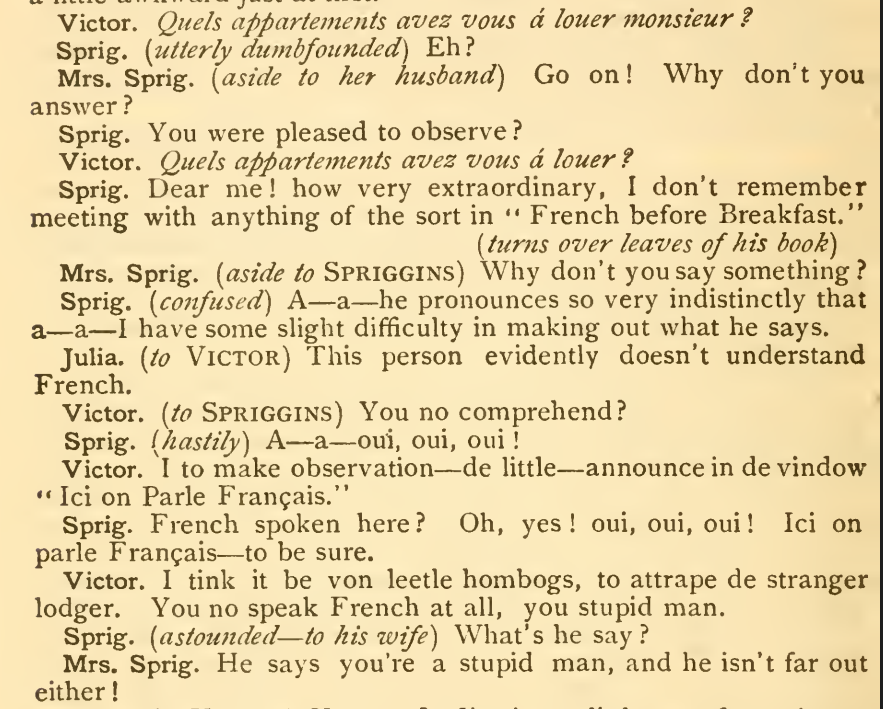
Excerpt from the play Ici on parle français, or the Major’s Mistake
This is precisely what one contemporary critic pointed out: “Those who have seen it on the stage and can now see it upon the screen will realise that it suffers a good deal in the reproduction in a photoplay […].”9 Another article suggests that the film’s most “excruciatingly funny”10 scene was the pistol duel — unfortunately missing from the print discovered in the “Bousbecque lot”.
No such luck!
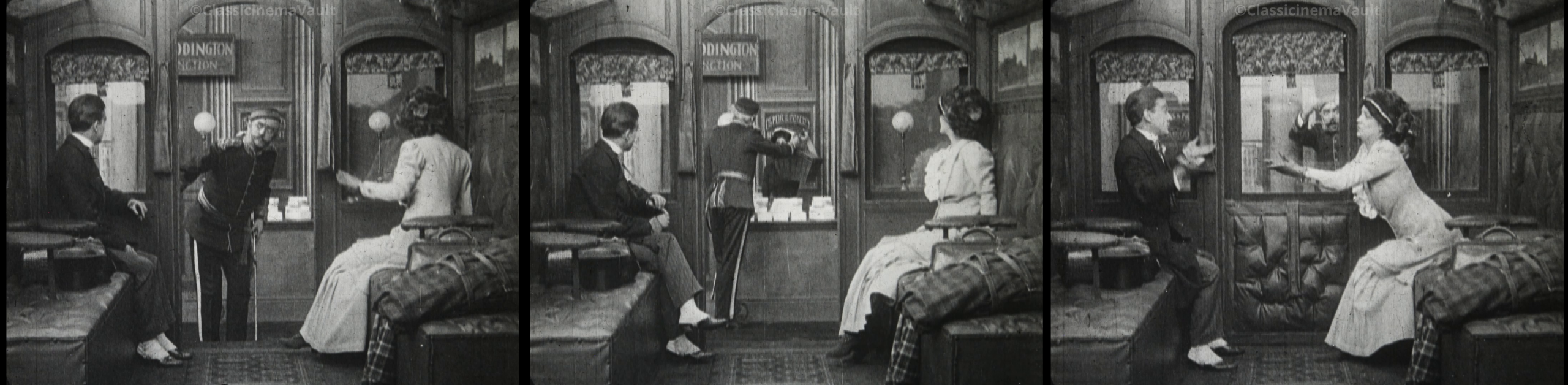
But let’s not be too harsh: there is still plenty to enjoy in How Spriggins Took Lodgers. The train sequence, in particular, contains some lovely touches. The trio gathered in the compartment lends itself to a delightful display of expressive faces, with Marc McDermott especially animated, while the scenery slips past the window behind them. The staging becomes even more interesting when the Major steps off the train to buy his wife a sweet. As the train begins to move again, he finds himself stranded on the platform, separated from the compartment, with the use of depth of field allowing the situation to unfold as an effective visual gag.
But the real comic revelation — all the more remarkable given that this was her first appearance on screen — is Carrie Clark Ward. With her strong physical presence, wonderfully expressive face and deliciously exaggerated mannerisms, she brings a vitality to the film that is sometimes sorely lacking elsewhere. Her character, a cook exasperated by the extra work brought about by the arrival of the boarders, “constitute[s] a large part in the comedy”11 , as The Billboard rightly observed in 1911.
4 – How Spriggins Survived
To conclude, let’s take a few words to examine the film’s physical characteristics. Released in the United States on either 19 April or 19 June 1911, depending on the source, How Spriggins Took Lodgers is a one-reel comedy measuring approximately 1,000 feet, giving it a running time of roughly fifteen minutes at a projection speed of 16 or 18 frames per second.
The film also appears to have been distributed in France, as demonstrated by our print with its French intertitles. Its advertised length was 288 metres (950 feet).

Kinetrogram, June 1st, 1911

Ciné-Journal, December 09, 1911
Unfortunately, the print found in the “Bousbecque lot” is incomplete. With a running time of nine minutes and fifty seconds at 16 frames per second, it measures approximately 590 feet — just over 60% of the film’s original length.
Considering that the film had previously been regarded as lost, this is still a remarkable find.
The print in our possession contains neither a title nor any credits. However, the presence of the Edison studios’ trademark was instrumental in identifying it (many thanks, once again, to Steve Massa for that!). It is also interesting to note that some of the intertitles do not bear the Edison mark, despite the New Jersey company’s famously uncompromising and aggressive approach to copyright infringement. Edison was not above taking legal action over the smallest individual frame in order to protect its monopoly.
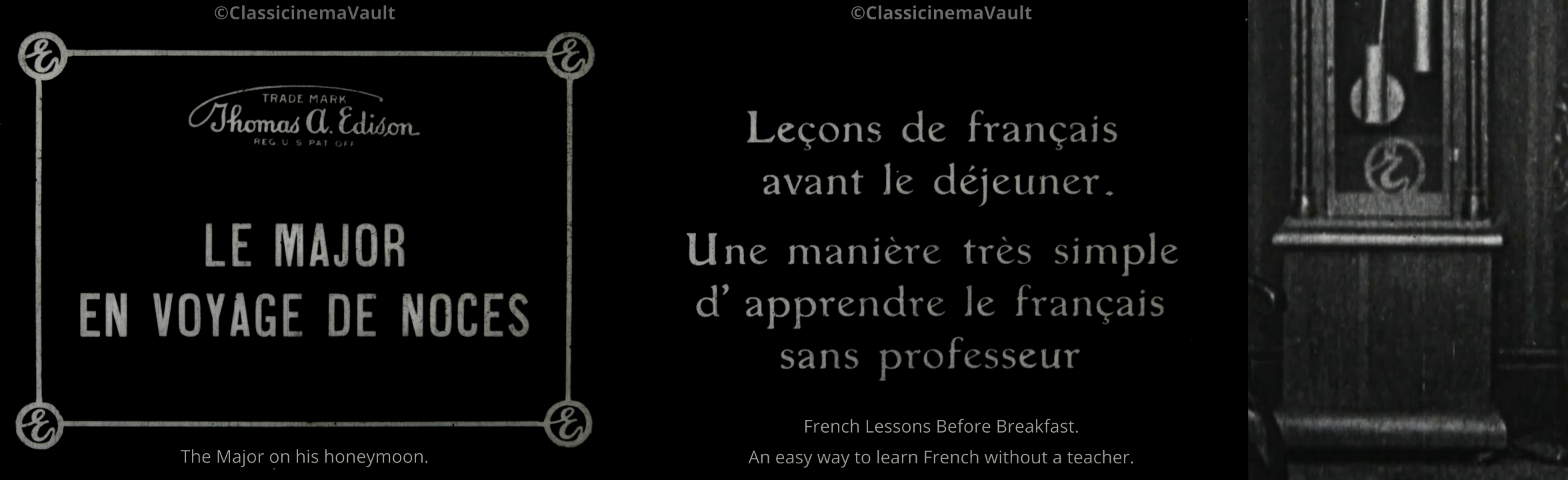
Intertitle bearing the Edison trademark (left), intertitle without a trademark (center), detail from a still showing the Edison logo on a prop (right)
If the Bousbecque print is indeed an original French release print from 1911, it is now 115 years old. Its remarkably good state of preservation should therefore be emphasised. Apart from the final few metres, which are faded and chemically deteriorated, the print shows relatively few scratches or signs of damage, suggesting that it was screened only rarely.
In short, another fine treasure has finally returned to the light — and to movement — more than a century after its release.
1– Kinetogram – 1913-06-01 – p.3
2 – The San Francisco Dramatic Review – 1908-08-01 – p.40
3 – Picture Play Magazine – March 1917 – p.50